
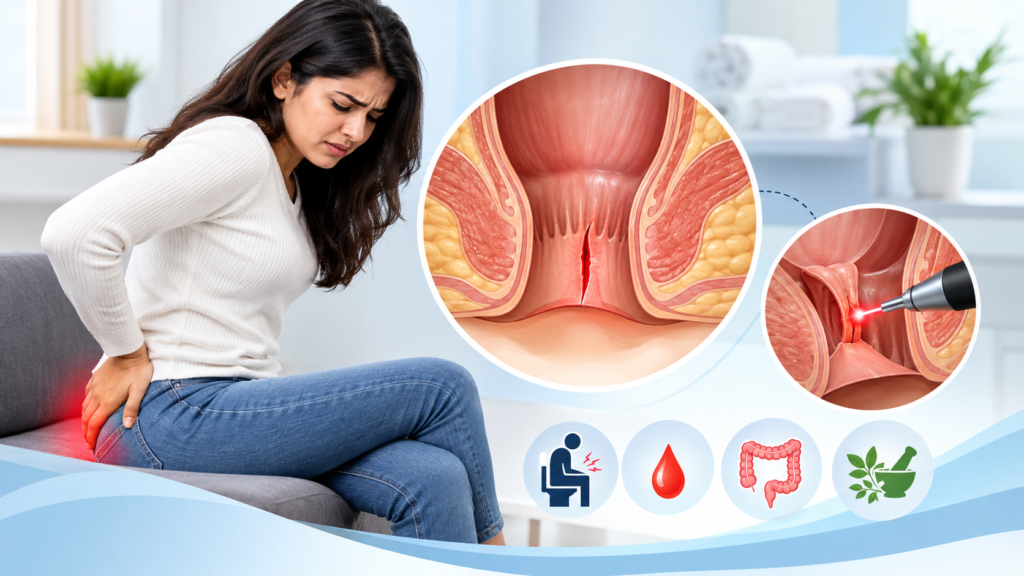
An anal fissure is a small tear in the skin around the anus that can cause sharp pain during bowel movements, burning, and bleeding. It commonly develops due to hard stools, constipation, or straining while passing stool. With the right diagnosis and treatment, many anal fissures can heal and their symptoms can improve.
Sankalp Hospital provides fissure treatment in Vadaj, Ahmedabad, with treatment options that may include medical management, dietary and lifestyle guidance, Ayurvedic approaches, and surgical treatment when clinically required. The appropriate treatment depends on the severity of the fissure, how long it has been present, and the patient’s overall health.
If you experience repeated pain or bleeding during bowel movements, consult a qualified healthcare professional for an accurate diagnosis.
What Is an Anal Fissure?
An anal fissure is a small crack or tear in the lining of the anal canal. It usually occurs when hard or dry stool stretches and damages the delicate skin around the anus. The tear can cause discomfort during bowel movements and may continue to hurt for some time afterward.
An acute fissure is a recent tear that may heal with appropriate care. A chronic fissure lasts longer or repeatedly reopens, sometimes developing additional skin changes. Chronic fissures may require more specialised treatment.
At Sankalp Hospital, patients seeking fissure treatment in Vadaj, Ahmedabad, can consult a healthcare professional to understand their condition and explore suitable treatment options.
Common Symptoms of Anal Fissure
Recognising the symptoms of an anal fissure can help you seek treatment early. Common symptoms include:
Sharp or cutting pain while passing stool.
Burning or discomfort around the anus after bowel movements.
Small amounts of bright red blood on toilet paper or on the surface of the stool.
A visible crack or tear around the anal opening.
Tightness or spasms in the anal muscles.
Fear of passing stool because of pain.
Constipation that worsens because bowel movements become uncomfortable.
These symptoms can also occur with other anorectal conditions, including piles. A medical examination can help identify the actual cause.
What Causes Anal Fissures?
Anal fissures can develop when the delicate lining of the anal canal becomes damaged. Common contributing factors include:
1. Constipation: Hard stools can stretch and tear the anal lining.
2. Straining during bowel movements: Excessive pressure can increase the risk of developing a fissure.
3. Repeated diarrhoea: Frequent loose stools may irritate the anal area and damage its lining.
4. Low fibre intake: A diet lacking sufficient fibre may contribute to constipation and hard stools.
5. Delaying bowel movements: Regularly ignoring the urge to pass stool can make constipation worse.
6. Previous anal injury or underlying conditions: Certain inflammatory bowel conditions and other medical problems can also cause anal fissures.
Identifying and managing the underlying cause is an important part of effective fissure treatment.
Fissure Treatment in Vadaj, Ahmedabad
Fissure treatment depends on whether the tear is recent, persistent, or associated with complications. Many recent fissures improve with conservative treatment, while chronic fissures may require additional medical or surgical care.
At Sankalp Hospital, patients can discuss their symptoms with a healthcare professional and receive guidance about suitable treatment options.
1. Medical Treatment for Anal Fissures
For many recent fissures, the first step is to make bowel movements easier and allow the affected tissue to heal. Depending on the diagnosis, treatment may include:
Medicines or ointments prescribed by a healthcare professional.
Stool softeners when appropriate.
Dietary changes to increase fibre intake.
Adequate water intake, unless medically restricted.
Warm sitz baths to help relieve discomfort.
Follow the prescribed treatment plan and avoid using medicated creams or herbal preparations without professional advice.
2. Laser Fissure Surgery in Vadaj, Ahmedabad
Laser treatment may be considered in selected cases, depending on the type of fissure, its severity, and the patient’s clinical condition. However, not every anal fissure requires laser surgery, and the appropriate procedure must be determined after an examination.
Patients searching for Laser Fissure Surgery in Vadaj, Ahmedabad, should first understand whether they need a procedure or can improve with non-surgical treatment.
A healthcare professional may discuss the following points before recommending surgery:
Whether the fissure is acute or chronic.
Whether previous medical treatment has been effective.
Whether persistent muscle spasm is contributing to the problem.
The potential benefits, risks, and expected recovery.
The possibility of recurrence and the need for follow-up care.
Laser treatment does not guarantee a painless procedure, immediate recovery, or freedom from recurrence. Ask the treating professional which technique is appropriate for your condition and what results you can reasonably expect.
3. Ayurvedic Treatment for Anal Fissure
Patients searching for fissure ayurvedic treatment in Ahmedabad may wish to explore traditional treatment approaches alongside appropriate medical evaluation.
Ayurvedic care may include individualised dietary recommendations, bowel habit guidance, and selected treatments based on the practitioner’s assessment. The choice of treatment depends on the patient’s symptoms and overall health.
It is important to understand that evidence for Ayurvedic treatments varies, and not every traditional treatment has been proven effective for anal fissures. Do not delay necessary medical or surgical care when a fissure is persistent or complicated.
Consult a qualified practitioner before using herbal medicines or applying preparations to the affected area.
4. Treatment for Chronic Anal Fissure
A chronic fissure may persist for several weeks or repeatedly reopen, especially when constipation and anal muscle spasm continue. Such fissures may need prescription medicines or a procedure.
Depending on the examination findings, a specialist may discuss options such as prescription ointments that relax the anal sphincter or a surgical procedure in selected cases. The benefits and risks of each option should be explained before treatment.
Early assessment can help determine why the fissure is not healing and prevent unnecessary discomfort.
How to Choose the Best Laser Fissure Doctor in Vadaj, Ahmedabad
Choosing the right healthcare professional is an important step when you are experiencing persistent anal pain or bleeding.
When searching for the best laser fissure doctor in Vadaj, Ahmedabad, consider the following factors:
Relevant qualifications and experience in treating anorectal conditions.
A proper examination before recommending surgery.
Clear explanations of non-surgical and surgical treatment options.
Discussion of possible complications, recurrence, and recovery.
Appropriate hygiene, surgical facilities, and follow-up care.
Transparent information about treatment costs and what is included.
Rather than choosing a treatment based only on advertising claims, look for a practitioner who explains your diagnosis and recommends care according to your individual needs.
Why Consider Sankalp Hospital for Fissure Treatment?
Sankalp Hospital, located near Akhbarnagar Circle in Vadaj, Ahmedabad, provides care for anorectal conditions and offers treatment options that include medical, Ayurvedic, and surgical approaches.
Patients considering the hospital for fissure treatment can enquire about:
Consultation for symptoms associated with anal fissures.
Assessment of persistent pain, bleeding, and constipation.
Guidance on dietary changes and bowel habits.
Discussion of suitable treatment options, including laser procedures where appropriate.
Information about Ayurvedic treatment approaches.
Follow-up guidance based on the treatment provided.
The most suitable treatment depends on the clinical assessment. Patients should confirm the availability of a specific procedure and discuss its risks, benefits, and expected recovery with the treating professional.
Tips to Help Prevent Anal Fissures
Healthy bowel habits can reduce the risk of constipation and help prevent repeated irritation of the anal lining.
Eat fibre-rich foods: Include vegetables, fruits, whole grains, and other fibre-rich foods in your daily diet.
Drink enough water: Maintain adequate fluid intake, unless your healthcare professional has advised a restriction.
Avoid straining: Do not force bowel movements or sit on the toilet for unnecessarily long periods.
Respond to the urge: Avoid regularly delaying bowel movements.
Stay physically active: Regular movement can support healthy bowel habits.
Follow your treatment plan: If you have already developed a fissure, follow professional advice and attend follow-up appointments when recommended.
These steps may help support healing, but they do not replace medical treatment when it is needed.
When Should You Consult a Doctor for a Fissure?
You should seek medical advice if you experience repeated anal pain, bleeding during bowel movements, symptoms that do not improve, or a fissure that repeatedly returns.
Heavy bleeding, black stools, fever, severe swelling, or worsening pain require prompt medical assessment because they may indicate a condition other than a simple fissure.
Do not assume that all anal bleeding is caused by piles or fissures. An accurate diagnosis is essential for choosing the right treatment.
Frequently Asked Questions About Fissure Treatment
1. What is the best treatment for an anal fissure?
The best treatment depends on whether the fissure is recent or chronic. Recent fissures often improve with fibre, adequate fluids, stool-softening measures, warm sitz baths, and prescribed medication. Persistent fissures may require additional treatment or surgery.
2. Is laser fissure surgery necessary for every patient?
No. Many anal fissures heal without surgery. Laser procedures or other surgical options may be considered in selected cases after an appropriate examination. The treatment choice depends on the diagnosis and the patient’s individual needs.
3. Where can I get fissure treatment in Vadaj, Ahmedabad?
Sankalp Hospital near Akhbarnagar Circle in Vadaj, Ahmedabad, provides care for anorectal conditions, including fissures. Patients can contact the hospital to enquire about consultations and available treatment options.
4. Is fissure ayurvedic treatment available in Ahmedabad?
Ayurvedic practitioners may offer individualised treatment and dietary guidance for patients with fissure symptoms. However, the suitability and effectiveness of each approach vary. Seek a proper diagnosis and do not delay necessary medical care.
5. How long does an anal fissure take to heal?
A recent fissure may heal within a few weeks with appropriate care. Chronic fissures may take longer and sometimes require prescription treatment or a procedure. Healing time varies from person to person.
6. Can an anal fissure heal without surgery?
Yes. Many recent anal fissures heal with non-surgical treatment, including measures to soften stools and prescribed medicines when needed. Persistent or complicated fissures should be evaluated by a healthcare professional.
7. Can a fissure come back after treatment?
Yes. A fissure can recur, particularly if constipation, hard stools, or repeated irritation continues. Maintaining healthy bowel habits and following medical advice can help reduce the risk of recurrence.
8. Is anal fissure the same as piles?
No. An anal fissure is a tear in the lining of the anal canal, whereas piles are swollen blood vessels in or around the anus and lower rectum. Both can cause bleeding and discomfort, so an examination may be needed to distinguish them.
Book a Consultation for Fissure Treatment in Vadaj, Ahmedabad
Persistent anal pain, burning, and bleeding can affect your daily comfort and make bowel movements stressful. Getting the right diagnosis can help you understand the cause of your symptoms and choose an appropriate treatment plan.
Sankalp Hospital offers consultation for anorectal conditions in Vadaj, Ahmedabad. Contact the hospital to enquire about fissure assessment, available treatment options, and appointment timings.
Hospital: Sankalp Hospital
Location: Akhbarnagar Circle, Vadaj, Ahmedabad, Gujarat 380013
Phone: +91 9662008511
If you are looking for fissure treatment in Vadaj, Ahmedabad, arrange a consultation to discuss your symptoms and the most appropriate next steps.
Medical disclaimer: This content is for general educational purposes and does not replace a medical consultation, diagnosis, or personalised treatment advice.