Raktamokshan Panchakarma Treatment in Vadaj, Ahmedabad
Raktamokshan is a traditional Ayurvedic procedure that involves the controlled removal of a small amount of blood under professional supervision. It is described in Ayurveda as one of the five major Panchakarma-related purification therapies and is considered in selected cases according to traditional Ayurvedic principles.
At Sankalp Hospital, located near Akhbarnagar Circle, Nava Vadaj, Ahmedabad, patients can enquire about the availability of Raktamokshan therapy as part of Ayurvedic care. The procedure requires a detailed assessment by a qualified practitioner to determine whether it is appropriate for the patient’s condition and overall health.
If you are looking for Raktamokshan Panchakarma Treatment in Vadaj, Ahmedabad, understanding the procedure, its traditional uses, possible risks, and necessary precautions can help you make an informed decision about your treatment.
What Is Raktamokshan Treatment?
Raktamokshan, also spelled Raktamokshana or Rakta Mokshan, is a traditional Ayurvedic procedure that involves removing blood using a method selected by a qualified practitioner.
In Ayurveda, this therapy is traditionally associated with conditions believed to involve an imbalance of Rakta Dhatu, or blood tissue. Depending on the clinical assessment and traditional Ayurvedic approach, different techniques may be considered.
Unlike general wellness therapies, Raktamokshan involves an invasive procedure and requires appropriate hygiene, careful patient selection, and professional supervision. It is not suitable for everyone and should never be attempted at home.
What Is the Purpose of Raktamokshan Panchakarma Treatment?
In traditional Ayurvedic practice, Raktamokshan is considered in selected conditions where the practitioner believes this procedure may be appropriate. The decision depends on the patient’s symptoms, medical history, and overall health.
Traditionally, the procedure has been discussed in relation to certain skin conditions, localised swelling, and inflammatory complaints. However, traditional uses do not establish that the procedure is effective for these conditions by modern medical standards.
Raktamokshan should not be considered a general detoxification treatment or a substitute for medically indicated treatment. A qualified practitioner should explain the expected benefits, limitations, alternatives, and risks before recommending the procedure.
Types of Raktamokshan Treatment
Different techniques are described in classical Ayurvedic practice. The method depends on the patient’s condition, the practitioner’s assessment, and the clinical setting.
1. Shastra Visravana
Shastra Visravana refers to traditional bloodletting methods involving a specialised instrument. Such methods require appropriate training, sterile equipment, and careful control to reduce the risk of bleeding and infection.
2. Jalaukavacharana
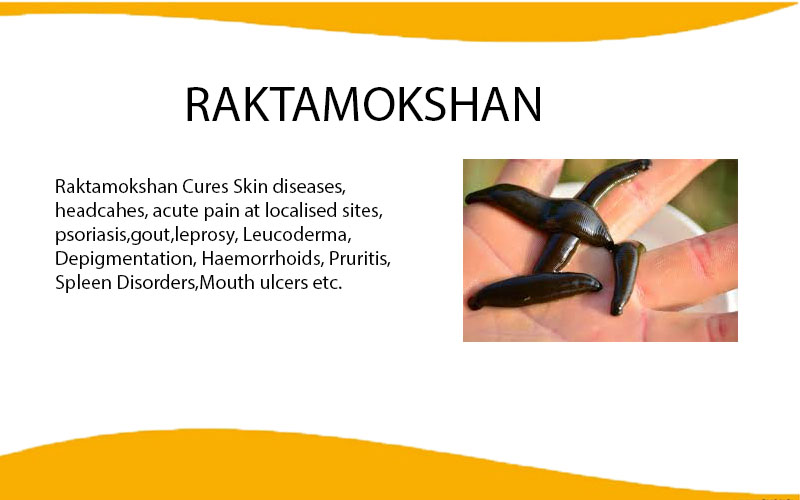
Jalaukavacharana is a traditional Ayurvedic method that uses medicinal leeches under professional supervision. It requires strict safety protocols, appropriate patient selection, and careful monitoring because leech therapy can cause prolonged bleeding and infection.
3. Prachchhana
Prachchhana is a traditional technique involving superficial incisions or controlled skin pricking in selected circumstances. It is an invasive procedure and must only be performed by a suitably qualified practitioner in an appropriate clinical setting.
The availability and suitability of these methods should be confirmed directly with the treating practitioner. Not every method is appropriate for every patient.
What Are the Traditional Benefits of Raktamokshan?
Raktamokshan has a recognised place in traditional Ayurvedic literature. Its proposed role varies according to the technique used and the condition being assessed.
Traditional Ayurvedic practice discusses this therapy in relation to:
-
Selected skin-related complaints
-
Certain localised inflammatory conditions
-
Specific complaints assessed within an Ayurvedic treatment plan
-
Individualised treatment approaches based on traditional Ayurvedic principles
These are traditional indications, not guaranteed outcomes. Scientific evidence supporting the effectiveness of Raktamokshan for specific medical conditions is limited or varies by technique and indication. Patients should seek an appropriate medical diagnosis and discuss evidence-based treatment options before proceeding.
How Is Raktamokshan Treatment Performed?
The procedure varies depending on the method selected. Patient safety and professional assessment are essential at every stage.
Step 1: Initial Consultation
The practitioner reviews the patient’s symptoms, medical history, current medicines, allergies, and any history of bleeding problems. The assessment helps determine whether Raktamokshan is suitable.
Step 2: Evaluation and Preparation
If the procedure is considered appropriate, the practitioner explains the method, potential benefits, risks, and alternatives. Necessary precautions are taken to maintain hygiene and reduce the risk of infection.
Step 3: Procedure Under Supervision
The selected technique is performed by a qualified practitioner using appropriate equipment and safety measures. The amount of blood removed, if applicable, and the procedure itself must be carefully controlled.
Step 4: Monitoring and Aftercare
The patient is observed as needed, and instructions are provided for caring for the treated area. Patients should follow all aftercare guidance and seek medical attention if they experience persistent bleeding, increasing pain, fever, or signs of infection.
The duration and number of sessions depend on the individual treatment plan. There is no standard schedule suitable for everyone.
Who May Be Suitable for Raktamokshan?
Raktamokshan may be discussed with a qualified Ayurvedic practitioner when a patient is seeking traditional Ayurvedic care for a specific complaint. Suitability must be established through an individual assessment rather than a general symptom list.
Before recommending the procedure, the practitioner should consider the patient’s health status, medications, medical history, and the availability of safer or more appropriate alternatives.
People with anaemia, bleeding disorders, low platelet counts, significant weakness, or other conditions that increase bleeding risk require particular caution. Patients taking blood-thinning medicines must disclose them before any procedure. The treatment may be unsuitable for some individuals.
Pregnant patients and people with significant underlying health conditions should seek professional advice before considering an invasive Ayurvedic procedure.
Important Safety Precautions for Raktamokshan
Because Raktamokshan involves blood removal or skin penetration, safety is essential. Potential risks include bleeding, infection, dizziness, fainting, delayed wound healing, and other complications.
For safer care:
-
Choose a qualified practitioner with appropriate training.
-
Confirm that sterile or appropriately processed equipment is used.
-
Share your complete medical history and medication list.
-
Ask about the risks, expected benefits, and alternative treatments.
-
Follow all wound-care and aftercare instructions.
-
Seek prompt medical care for uncontrolled bleeding, fever, increasing redness, severe pain, or other concerning symptoms.
Do not undergo Raktamokshan solely for general detoxification or without a clear clinical reason and professional guidance.
Why Consult Sankalp Hospital for Raktamokshan in Vadaj, Ahmedabad?
Sankalp Hospital is an Ayurvedic hospital in the Nava Vadaj area of Ahmedabad that lists Panchakarma among its services. Patients interested in Raktamokshan can contact the hospital to confirm whether the procedure is currently available and arrange an appropriate consultation.
Before starting treatment, patients should understand the procedure, the practitioner’s recommendations, and the safety measures involved.
When choosing a Panchakarma facility, consider:
-
A proper consultation and health assessment before treatment
-
Clear information about the procedure and its risks
-
Appropriate infection-control practices
-
Individualised recommendations rather than a standard treatment plan for everyone
-
Follow-up instructions and access to medical care if complications occur
The goal of a consultation is to help patients understand their options and determine whether the proposed procedure is appropriate for their health needs.
Raktamokshan Panchakarma Treatment in Vadaj, Ahmedabad
If you are searching for Raktamokshan Panchakarma Treatment in Vadaj, Ahmedabad, Sankalp Hospital is a local facility you can contact to enquire about Ayurvedic consultation and treatment availability.
Raktamokshan is not a routine wellness procedure. A professional assessment is important to determine whether the therapy is suitable, understand the possible risks, and discuss other treatment options.
Patients looking for a Panchakarma centre in Ahmedabad should choose a facility that explains its treatment methods, safety measures, and practitioner qualifications clearly. The right approach depends on the individual’s medical condition and treatment needs.
Proctology and Ayurvedic Care at Sankalp Hospital
Sankalp Hospital also lists services for anorectal conditions, including piles, fissures, and fistulas. Patients searching for a Proctology clinic in Vadaj, Ahmedabad can enquire separately about consultation and treatment options for these conditions.
Proctology services and Raktamokshan are different areas of care. The appropriate treatment for piles, fissures, fistulas, or other anorectal problems depends on an accurate diagnosis. Patients should not assume that Raktamokshan is a suitable treatment for these conditions without an individual clinical assessment.
Frequently Asked Questions
1. What is Raktamokshan in Ayurveda?
Raktamokshan is a traditional Ayurvedic procedure involving controlled blood removal. It is described among the major purification therapies associated with Panchakarma and is considered in selected cases under professional supervision.
2. Is Raktamokshan a Panchakarma treatment?
Yes. Raktamokshan is traditionally included among the major Ayurvedic purification procedures associated with Panchakarma. Its use and suitability depend on the practitioner’s assessment and the patient’s health condition.
3. What conditions are traditionally associated with Raktamokshan?
Traditional Ayurvedic practice discusses Raktamokshan in relation to selected skin complaints and certain localised conditions. However, its effectiveness varies by indication, and scientific evidence is limited. Patients should obtain an appropriate diagnosis before considering the procedure.
4. Is Raktamokshan treatment safe?
Raktamokshan carries risks because it involves blood removal or skin penetration. Potential complications include bleeding and infection. A qualified practitioner must assess suitability, explain the risks, and follow appropriate infection-control measures.
5. How many Raktamokshan sessions are required?
There is no fixed number of sessions for everyone. The recommended approach depends on the patient’s condition, the technique used, and the practitioner’s assessment. Ask your practitioner about the proposed schedule before starting treatment.
6. Can anyone undergo Raktamokshan?
No. People with anaemia, bleeding disorders, low platelet counts, or certain other health conditions may face increased risks. Patients taking blood-thinning medicines should disclose them before treatment. Individual medical assessment is essential.
7. Where can I enquire about Raktamokshan treatment in Vadaj, Ahmedabad?
You can contact Sankalp Hospital near Akhbarnagar Circle, Nava Vadaj, Ahmedabad, to ask about current Raktamokshan service availability, consultation timings, and appointment requirements.
8. How do I choose a Panchakarma centre in Ahmedabad?
Look for a facility that provides an individual health assessment, qualified practitioners, appropriate hygiene, clear explanations of risks and benefits, and suitable follow-up care. Confirm that the specific treatment you need is available.
9. Is Raktamokshan the same as blood donation?
No. Raktamokshan is a traditional Ayurvedic procedure performed for selected clinical purposes, whereas blood donation is intended to collect blood for transfusion. They have different purposes, protocols, and safety requirements.
Book a Consultation for Raktamokshan Treatment
Looking for information about Raktamokshan treatment in Vadaj, Ahmedabad? Contact Sankalp Hospital to enquire about Ayurvedic consultation, current treatment availability, and the assessment process.
Discuss your symptoms, medical history, and current medicines with a qualified practitioner before deciding on treatment. Understanding the procedure, its limitations, and its potential risks can help you make an informed decision about your care.

A good and healthy body is the reason behind a healthy mind
Our professional team works to increase productivity and cost effectiveness on the market